Yesterday was another day for my wife to chit chat at night when I am down and out with my days work. Being a scientist par excellence, I always took her for being superior in intelligence to me, except for the fact that she hardly puts that excellence to use (a common feminine traitJ).
While watching an Indian new channel last night we ended up in an argument over what India can do and cannot. A topic, which is most debatable by any standards, whether in India our outside, and notably becomes more volatile when the debaters’ are sitting in any country outside India. In a similar fashion we had our own arguments and counter arguments, and then came a statement which makes me blog it down today “India has so many problems that its difficult to prioritize any of them. Every problem is a priority”.
So I thought why not list downs all the problems, irrespective of the priority they stand.
Crime
Uniform Civil code
Infrastructure
Housing
Education
Employment
Population control
Pollution
Traffic
Accountability
Political Instability
Democracy (of course it’s a problem for a country like India where everyone has liberty to do anything anywhere anytime.)
Animal Welfare
Health Care
Corruption
UPSC (yes it is a menace, why not evaluate by the attitude of civil servants employed in India.)
Religion ( is of course a problem, especially with the orthodox Islam followers)
Railways
Airways
Telecom ( but its improving rapidly)
Drinking water
Illiteracy
Banking ( its better and more affordable than anywhere else in the world)
Inflation ( this is a recent one since UPA Govt came in power)
Power & Electricity ( the biggest problem of all)
Adulteration
These are few which I could recall, am sure there are many more which I would have inadvertently left out, in that case please comment and add more to the list….
I stood beside her, entranced by her as one is entranced by a trainwreck or a plane crash. I was confused by her words, shocked by her tone, and horrified by her behaviour. She was an American, and she was yelling…again. I was part of a group that had stopped at an important Muslim mausoleum in the Indian city of Allahabad. The woman I had been travelling with had, for the past week, bombarded our Indian guide with inane questions, insulted him with her boorish behaviour, and driven the entire group to madness with her attitude. At that moment her intent might have been innocent enough, as she had asked the curator whether she could access the second floor. “Stairs?” she asked at first, with the non-English speaking curator smiling politely. “Stairs,” she repeated a moment later, removing any semblance of a question, her tone becoming slightly annoyed. The curator smiled again, stating the name of the Muslim dignitary buried here. “Stairs!” she began to shout, becoming visibly agitated by the fact that she apparently found someone in the entire world that didn’t understand her mother tongue. The man began to point outside, clearly confused by the nature of her question. “WHERE… ARE… THE… STAIRS!” she yelled, purposefully annunciating every word in typical, offensive, North American style. It was at this moment that I intervened, gently suggested that perhaps the curator doesn’t understand the word ‘stairs’ and perhaps she should explore on her own….
A primary reason for my incessant globetrotting is to try to understand people different from myself, to learn from them and observe their day-to-day existence. The strange thing I have come to realize, however, is that the people that are the hardest to understand, the most difficult to learn from, and the most foreign to me, are travellers themselves. It is this difficulty with the understanding the traveller that has motivated me to categorize the various philosophies of travel that people—most often implicitly—employ as they roam the globe.
So, being greatly indebted to author Benjamin Hoff and his ingenious use of A.A. Milne’s Winnie the Pooh characters as vessels for communicating deep philosophical truths, I have decided to forgo the complex archetypes of academia, and embrace, instead, much simpler categories:
Eeyore Explorer: Anyone who is familiar with the A.A. Milne’s lovable characters, knows of the morose and taciturn donkey, Eeyore. He is, at his core, an insufferable killjoy, at each moment wondering what will go wrong in the next. At least the original Eeyore employed a certain dark humour with his melancholy musings, something clearly lost on modern Eeyore Explorers. What Explorers do have is fear, as they are scared of almost everything that makes travelling great. Small hitches in travel plans become world-shaking disasters, and experiences that push personal boundaries are avoided at all costs. Explorers mask their fear in a cloud of realism, they say, and state that there’s nothing they would learn about themselves through those experiences anyways, so why try? It is quite depressing to travel with an Eeyore Explorer, as they talk as if they’ve done everything, have nothing to learn, and know more then everyone else. Along your travels, if you happen to encounter such a beast, its better just to leave them to their own devices and set out in the opposite direction.
Tigger Traveler: The Tigger Traveler is the antithesis of the Eeyore Explorer. These sorts of travelers believe in everything and believe that everything is something they should be doing. Every experience, every ceremony, every item in the store, has great value for the Tigger Traveler, and every one of them has to be consumed and experienced as quickly as possible, in order to move to the next thing. The problem becomes, when Tiggers give meaning to everything, they are, in actuality, robbing everything of meaning. They move from experience to experience, seeking instant gratification. They want to know everything about everything, but end up knowing nothing about anything. They remain excited by the possibilities of what they might learn, but they never experience anything long enough to actually learn from it. While some might label these creatures as enthusiastic, self-motivated, and free spirited, they are, in actuality, trapped in a rudderless existence, enslaved by their ever-changing whims. It is exhausting to travel with a Tigger Traveler, as the constant inane chatter and vagabond wanderings are enough to send anyone packing. If you happen to encounter a Tigger Traveler bouncing down the road, lie down and play dead and hope they don’t make friends with you.
The Rabbit Roamer: The Rabbit Roamer is a close relative of the Tigger Traveler, but is only found in warm locales, near beaches and all-inclusive resorts. You see, the ironic thing about Rabbit Roamers is that they hate to roam. They are, in common parlance, task-oriented workaholics, and they are found on beaches because that is where they go to escape their day-to-day roaming. Back home, these creatures are found continuously moving from one project to another, constantly trying to keep up with the Joneses (I don’t really know who they are, but they run really fast). They travel only because they have to (to accumulate something for themselves) or in a vain attempt at relaxation, yet they never truly experience the world outside of themselves, and they don’t seem to want to. They fear the other, as in anything that is different from them, and mask their fear in a veil of cleverness and sarcasm. But don’t worry! Although the Rabbit is the most prolific type of traveler, if you steer clear of all-inclusive resorts, it is unlikely that you will ever encounter one abroad.
The Owl Observer: The Owl is an intellectual creature, and at first glance seem to make ideal travelling partners for those searching for answers to the various questions of life. While it is certainly true that Owl Observers do know quite a lot about a lot of things, their knowledge is often fragmented and compartmentalized, bits of obscure trivia used to impress audiences of people who don’t know better. Far from reflecting the attitude of the impassioned traveler, excited to encounter the world, Owl Observers are more concerned with how they are perceived then with what they can learn. They use flowery, intellectual language (sorry) that seems purposely designed to keep others from learning, and they present themselves as superior to those around them, especially in regards to the cultures they are visiting. They might be able to tell you how many years it took to build the Taj Mahal, how many tonnes of marble is used, and its astrological alignment, but they would never be able to tell you of the love that motivated Shah Jahan to build it. It is these essential experiences of travel that the Owl Observer misses completely. Travelling with an Owl Observer can be a humbling experience, as its easy to feel intimidated by the constant barrage of trivial facts, but have no fear, seeking out authentic travel experiences will teach you more than any Owl every could.
The Pooh Pilgrim: While Pooh Pilgrims may be intelligent, enthusiastic, curious, creatures, their primary motivation for travelling is none of these things. The Pilgrim is guided by a Taoist essence of travel, of water flowing wherever the contours of the land happen to take it; of seeing what’s around the next corner simply for curiosities sake. While plans are often worthwhile, the most authentic, world-changing, and memorable experiences come to the traveller when least expected. However, while Pooh Pilgrims remain open to these experiences, they are not, strange as it may seem, primarily motivated by them. In the words of Taoist philosopher Lao Tzu, “When you realize there is nothing lacking, the whole world belongs to you.” His point, it seems, is that before you can learn from others, you must discover yourself. The sort of rudderless journey of self-discovery that many take is not the task of the Pooh Pilgrim, and is better left to Tigger Travellers instead.
It is this type of travelling creature that I strive to be, one that seeks to appreciate the world for what it is, not what it can provide; seeks to learn from the world, and not to burden others with my global trivia; and embrace a spontaneous sense of adventure instead of thinking that I’ve done it all already. As Lao Tzu says, “True knowledge [of existence] can be gained by letting things go their own way. It can’t be gained by interfering.” So what kind of travelling animal are you?
Mahindra & Mahindra Ltd. (M&M) launched the XYLO D2 in Delhi, a new variation of its best selling XYLO vehicle. Equipped with a new 2.5 litre mDI CRDe engine, the XYLO D2 offers excellent power and torque and a high level of fuel efficiency at 13 kmpl. The XYLO D2 is available at an attractive price of Rs. 6,30,300 lakh (ex-showroom Delhi price).
At the heart of the XYLO D2 is the mDI CRDe engine which complies with BS 3 emission norms and delivers 95 bhp with 215Nm of torque over a range of 1400 to 2600 rpm. The 2.5 litre engine is meshed with a five-speed manual gearbox and has been built on the Scorpio NEF CRDe engine family with relevant technological advancements. The Mahindra XYLO D2 is available in gold shimmer, mist silver and fiery black shades.
He was the first, to introduce what is called psycho-analysis.
His theory is that we are all motivated primarily by sexual desire.
Man is an animal. Look at the bull among a herd of cows. The latter are busy eating, as much as possible, just to store in the first of four chambers in its stomach, to be chewed leisurely, lying in its resting place.
I have never seen the bull eating. It is idling, looking at the herd and choosing the cow for his next act.
If you see the advertisements showing almost nude women, it would seem that men are also like bulls. But we do not have the freedom. So we suppress our urge. The conflict between the wish and the reality of the necessity for suppression, causes tension and hysteria.
When we became civilized, many inhibitions came, blocking the natural flow of sex. Among early Romans, brothers married their own sisters. If there is no sister, next preference was for cousins. Even now in Tamilnadu, uncle-niece marriages are common. Brothers marrying a common wife, is also prevalent in parts of India.
Two men getting sexually united was prevalent from biblical times. Now such marriages are allowed in some countries.
In India, women are the greatest sufferers, in all respects. Their sexual impulses are suppressed. A woman may like a guy, other than her husband. She has to forgo that joy.
Suppression of sex may result in mental imbalance or may be sublimated as devotion, excessive attachment to a child etc.
Most men and women are happy, working and looking after children. But there is a minority who like to do something or to think, indulge in arts or literature. For such people, sex may not be the primary motivation.
Freud may be over- simplifying, what is a very complicated thing called MIND.
I round this year up with these videos I found on Youtube. BharatBala Productions are known for making incredibly creative videos depicting the cultural heritage of India. These are just 2 of them. Explore their Youtube channel to see more of Incredible India, my country.
This activates air element – one of the five elements, inside you. It is connected with Heart Chakra. Chant the bija mantra ‘Om Yum Namaha’ when you do the Mudra.
How to do Chin Mudra
On both hands, index finger touching the thumb, keep the other three fingers straight. Can keep the eyes closed — not necessary though. Watch the breath. Preferably keep the back straight or move around if you are feeling lethargic.
Advantages of doing Chin Mudra
For Lower Back Pain, do Chin Mudra and chant “Wung R Hong”.
Chin Mudra brings down the stress level. Therefore, do Chin Mudra until tension comes down to zero.
This is also called as Gyan Mudra as it is normally used during meditation by keeping your hands on your lap, with the palm of the hands facing the sky. You can put Chin Mudra while chanting mantras.
Chant EEJO while doing Chin Mudra.
After eating food, if Belching happens, then it means the Apanan – a type of prana that is supposed to flow down, is coming up.
It will also bring down your head aches – which could be happening due to too much worry and thinking. You will get better relief by doing this Mudra and chanting the Chinese mantra.
How to remove congestion from the pranic body?
If the congestion is more, Chin Mudra is the most effective way to remove the congestion. Chin Mudra will activate the Apana Vaayu which goes down. You have to do inhaling and exhaling with Chin Mudra.
This Mudra releases the excess energy from us. For example, your excess anger will come down.
Kindles yellow energy inside you. Mars is activated.
A 20 year old girl accidently falls in love with a person of 40 years. May be it is infatuation. This Mudra controls the infatuation. If they don’t want to do the Mudra, give them gem remedy Coral. If its infatuation, they will separate and if it is true love they will marry.
Infatuation is excess of un-channelled energy. This Mudra helps to prevent misconduct between male and female.
Good for Lethargy
When you feel sleepy after lunch.
Mentally stressed out in the evening as too many thoughts in the mind.
Not able to get from bed in the morning.
Chin Mudra boosts your energy and thus activity.
When the mind has gone overboard, it can normalize.
The Chin Mudra helps to boost activity during the day.
Affirmations to remove lethargy
“I release my desire to sleep”
“I release my resistance to get up and do the work.
(Desire and resistance work in opposite directions)
Given to: Northern railways, Jaipur central station, Rajasthan, India
Full amount for the ticket: PAID (including the extra tip)
Gone forever: -
Hypothetically asking –
“How would you feel if you have done everything according to the law, if you have given your life only saving to a hand of rail officials in charge for parcel delivery, and still being cheated, lied into your face, and left without any word of explanation, apology, information…. Left without a bike that you have bought with your last money, the only representation of home in a foreign country… how would anyone feel being cheated by the government officials and not being able to do anything about it?
Long question, and mostly without an answer.
I came across an article a week ago in Chennai Today. I didn’t understand half of it. Partly because English is not my first language, but partly also because the article was being written without any sense, missing out the most important information.
It was about a 60 year old woman who had been raped while going back home from work some 36 years ago.
She was working as a nurse in one of Delhi hospitals and on her way back home, someone attacked her, and raped her. She was 25 years old. And apart from being raped, she was as well strangled by a metal chain, which made her lose her vision, ability to speak and made her paralysed completely for a life. This was the part I understood. Together with the fact that the police have found the perpetrator and he has been brought up in front of the authorities that have sent him to prison for 7 years (the maximum sentence someone can get in India). The part I did not understand is that the same lady, who is apparently laying in a coma for 36 years as a vegetable, has now filed a case at the high court, asking to be euthanized because there is no sense in keeping her alive attached to the machines. I didn’t understand how someone who is in the coma, without the ability to see, talk or even move, can express her wish through the voice of a woman laying on the bed next to her.
But all that aside…
The man, who was so evidently guilty of destroying one young human life, has done his 7 years in prison and is working today in the same hospital where his victim is laying attached to the wires without any hope for any kind of life.
High court has denied the wish of a 60 year old vegetable lady to finish her life with just a little bit of dignity… but has at the same time given another chance to a monster.
Let me tell you the story of Xerxes, the last king of Persia, before it fell under Greek hands…
I came across Herodotus and his Histories thanks to my best friend and her birthday present. I fell in love immediately in his writings… In his easiness of approaching the world and objectiveness in writing about it.
(…) Xerxes had fallen in love with [his brother] Masistes’ wife, who was also there [in Sardis]. She proved impervious to his message, however… Under these circumstances, with all other options closed off, Xerxes arranged for his son Darius to marry the daughter of this woman and Masistes, since he expected to have a better chance of seducing the woman in this situation.
However he changed his taste on the way…
(…) After he had arrived and had received Darius’ wife into his house, he dropped Masistes’ wife and began to desire Darius’ wife, Masistes’ daughter, instead. Her name was Artayne, and he was successful with her.
After a while, however, the secret got out. What happened was that Amestris, Xerxes’ wife, wove a wonderful shawl, long and colourful, as a present for Xerxes. He liked it a lot, and wore it when he went to visit Artayne. She gave him pleasure too – so much so that he told her he would give her anything she wanted in return for the favours she had granted him; whatever she asked for, he assured her, she would get.
You can imagine what was the only thing she wanted. Of course… the shawl… and no matter how Xerxes tried convincing her to take anything else… she only wanted the shawl… I believe there must be something in women, some desire to have all what they want, otherwise it is not worth it…
(…) Eventually, then, he gave her the shawl, which she liked so much that she used to wear it and show it off.
Amestris heard that Artaynte had the shawl, but this information did not make her angry with Artaynte. Instead she assumed that her mother was to blame and was responsible for the whole business, and so it was Masistes’ wife whose destruction she started to plot. She waited until her husband Xerxes was holding a royal banquet – that is, the banquet, which is prepared once a year on the king’s birthday… This is the only time of the year when the king anoints his head with oil, and he also distributes gifts among Persians. So when the day arrived, Amestris told Xerxes what she wanted her gift to be – Masistes’ wife. Xerxes understood the reason for her request, and was shocked and horrified, not only of the thought of handing over his brother’s wife, but also because she was innocent in this matter. His wife was implacable, however, and he was constrained by the tradition that on the day of the royal banquet no request could be refused, so he agreed, with extreme reluctance. He turned the woman over to his wife and told her to do with her what she liked, and also sent for his brother. When he arrived, he said, “Masistes,… you are a good man. I want you to divorce your present wife, and I’ll give you my daughter instead. You can have her as your wife. But get rid of the present one; the marriage displeases me.”
Masistes was astonished at the king’s words. “Master”, he said, “what a cruel thing to say! Can you really be telling me to get rid of my wife and marry your daughter? I have grown-up sons and daughters by my wife… Besides, she suits me perfectly well… Please let me stay married to my wife. “
This reply of his made Xerxes angry, and he said, “Do you want to know what you’ve done, Masistes? I’ll tell you. I withdraw the offer of marriage to my daughter, and you’re not going to live with your wife a moment longer either. That will teach you to accept what you’re offered.”
At these words all Masistes said was: “You haven’t yet killed me, master.” Then he walked out of the room.
In the mean time, during this conversation between Xerxes and his brother, Amestris had sent for Xerxes’s personal guards and with their help had mutilated Masistes’ wife.
It is rather disgusting how Heraclites describes what all the jealous woman had done to another, innocent one, but the point was that after all was done … She sent her back home, totally disfigured.
Masistes was still completely unaware of all this, but he was expecting something terrible to happen to him, so he ran back to his house. As soon as he saw how his wife had been maimed, he first sought the advice of his sons and then made his way to Bactria along with his sons and, of course, others as well, with the intention of stirring up revolt in the province of Bactria and doing the king as much harm as he could. And he would have succeeded in this, in my opinion, if he had managed to reach the Bactrians and the Sacae in time, because they were attached to him, and he was the governor of Bactria. But Xerxes found out what he was up to; he dispatched an army to intercept him while he was on his way, and killed him, his sons, and all his troops. And that is the end of the story of Xerxes’ desire and Masistes’ death.
I still remember Goran Sergej Pristas’ performance, the part when there is a very short dialogue in between a judge and a priest…
Judge: God! I committed a sin.
Priest: Do you regret?
Judge: I mustn’t!
There is a family in Kashmir, only one among them hundreds. It is a family of husband and wife and their 5 daughters. The husband was a carpet seller in Delhi, and one fine day in June 2005, he was arrested by the Indian police and put up in
Tihar jail in Delhi. One of the worse jails in India where he was taken under the charge of being a militant, Muslim terrorist engaged by the Pakistani terrorists to fight against India. The family never went to visit him, since there is no man in the family to accompany them, and they got to know about his arrest only through the media.
Now… if a cold blooded rapist and potential murdered can get an immediate trial, and be set free after seven years, how come an innocent man can’t even get to have his trial after more than 4 years?
Today I have received a letter from a friend saying: “I don’t want to preach you, but… you woke up this morning and opened your eyes, which is good… you eat your breakfast, which is good… you went out and met some people, to some of them you have smiled and said ‘Good Day’, which is good as well… you did your practice, which is good… you eat your dinner, which is good… and you will lay down and sleep comfortably, which is good…
It is enough Maja.
I agree…
But it made me angry that the official person in charge for the only valuable thing I posses in life loses it, and there is nothing I can do about it. I filed a complaint, I spoke to everyone… I even had a wish to go back to Jaipur and break some legs… but what made me angry the most was the fact that if I would manage to find or get my bike back in this country… it would make all the other stories meaningful. It would prove that the law belongs only to the ones who have money and are loud enough to demand. Yet, if they don’t find my bike… that would be a proof that there is something terribly lacking in this whole system, and that history is nothing but a good alter ego laughing at us while softly whispering: “Didn’t you learn anything? You can’t posses anything… You are nobody… Nobody is perfection… Just let it be… Walk… Be… Just let it be…”
Name (how I liked to call her): bullet 350
Family name: Royal Enfield
Last time seen on (with my eyes): 6th December 2009
Given to: Northern railways, Jaipur central station, Rajasthan, India
Full amount for the ticket: PAID (including the extra tip)
The JHC has faulted the design of BIA and held to account the people responsible ,namely, decision makers in awarding the contract ,okaying the design and not following procedures.No body has denied the mistake pointed out. I do not see any thing objectionable in this.
-NRN should not be criticized-Is he beyond criticism?He is an entrepreneur who made it big and made a power to reckon with in the international arena in IT. That does not make him a God.He can be criticized if he is wrong.May be the media has given him larger than life image. Funnily he has not made any comment, as he is proper.Why do others talk crap?
-Private investors will be demotivated.-If private investors commit mistakes, should they be applauded?They must take the rap for their mistakes.Would the private industry let go of their CEO and senior managers, if they make similar mistakes in their companies?How come Hyderabad airport is not censured?Ascribing motive is non sense. The committee has been asked on specific request to go into the affairs of BIA.It has done a job.Now you fault it.At this rate you shall direct the independent agencies or what is left of them,like C&AG and CBI to arrive at conclusions dictated by politicians and industrialists.(unfortunately this is the case). What is sad is the lack of accountability by the industrialists.They do not seem to be different from politicos as for as accountability is concerned.Indications are that the report shall be shelved.
The mistake is to have tabled the report before all members have signed it.
BANGALORE: The state government has landed itself in a spot, as its Joint House Committee report on the Bengaluru International Airport has come
in for severe criticism from industry captains. They believe the report questions the very premise of the public-private partnership model on which the airport project was built.
The Rs 2,500-crore BIA is the first and largest PPP project to have come up in the state. Over Rs 50,000 crore is riding on the back of several PPP projects in road and infrastructure projects. Barring this, the state government is talking of PPP projects in biotechnology, IT, textile and agro-processing, etc.
“How can the state government talk about PPP when this is how they treat their private partners? The government is sending the wrong signal to industry on the future of PPP,” said Kiran Mazumdar Shaw, CMD, Biocon and chairperson of the state’s Vision Group on Biotechnology. “This report will surely create a temporary feel-bad factor in industry. As an industry body, we’ll definitely take up this matter with the government, in the right spirit,” said T Parabrahman, chairman, CII Karnataka chapter.
K R Girish, president, Bangalore Chamber of Industry and Commerce, said, “This report could also damage the state’s prospects for organizing the Global Investors’ Meet in June 2010. Such reports will make it difficult for the government to invite foreign investment and private equity participation for projects in the pipeline.” Harish Bijoor, domain expert, says the Hyderabad airport built with private participation gives you a feel of being in an international airport. So, there is nothing wrong with it. http://timesofindia.indiatimes.com/city/bangalore/Experts-slam-House-panel-report-on-BIA/articleshow/5367897.cms
At the end of my last trip to India I had written:
“Leaving India tomorrow and although I love India it is really time to just get the heck out of here. I’m tired of the crowds and the traffic, tired of malnourished children or people with 2 or more serious deformities hovering all over the street asking for money, tired of being stared at by gross men, tired of yelling all day every day and just plain tired.”
This trip has been different. My last two weeks in India are summarized by the photographs below of the beach in front of the resort and palace grounds which are five minutes away from where we were housed.
What do these two pictures have in common?
Vijay Vilas Palace grounds
The beach.
1st guess:
They are both taken on the property of Vijay Vilas Palace in Gujarat, India where I was working on an Indy flick for about two weeks.
That was the easy answer….now look closer.
What I am getting at is what you don’t see —
There are no people! No crowds, smog or pollution! Quiet stretches of clean nature and serene surroundings.
The Vijay Vilas establishment, also the location of the epic Lagaan is on private land so is isolated from the common experience of India. While staying there every day I got to run, walk or do yoga on an empty beach and let myself be bored in the quiet without internet or phone. When we began filming the big extravaganza scenes which included the use of 150 extras, two camels and a floating jetty the experience began to feel a bit more familiar. Still, after we wrapped the camels, people and set left the scene and we were again alone with a lot of sand and stars to contemplate.
Aspirin is prescribed for high cholesterol,it also causes intestinal bleeding.
Pain killers cause serious after effects.
Scans increase the risk to cancer.
Diuretics damage kidneys.
Cancer inducing genes identified now;yet we have already cured it.
Caffeine was perceived to be carcinogenic;now it reduces cancer risk also prevents heart disease.
Take any medicine, you have the same ambivalence.
Or take any prognosis-as many number of opinions as that of specialists.
Is Medicine a Science?
Post menopausal women who take anti-depressants face a small – but statistically significant – increased risk of a stroke, research suggests.
The US study was based on 136,293 women aged 50 to 79, who were followed for an average of six years.
Anti-depressant users were 45% more likely to have a stroke than women not taking the drugs.
The data, published in Archives of Internal Medicine, is taken from the Women’s Health Initiative Study.
When overall death rates were examined, those on anti-depressants were found to have a 32% higher risk of death from all causes during the study than non-users.
The researchers stressed that the overall risk of a stroke was relatively small. Even for women on anti-depressants, it was less than one in 200 chance in any given year.
You have to weigh the benefits that you get from these anti-depressants against the small increase in risk that we found in this study
Dr Sylvia Wassertheil-Smoller
Albert Einstein College of Medicine
However, they said that because so many women were taking anti-depressants the effect would be significant across the entire population.
It is not clear whether taking anti-depressants is solely responsible for the increased risk of a stroke.
Depression itself is known to be a risk factor for cardiovascular problems.
The researchers tried to take this into account in their analysis of the data – but could not rule out the possibility that it influenced the final results.
The study found no difference in stroke risk between the two major classes of anti-depressants, selective serotonin reuptake inhibitors (SSRIs) or tricyclic anti-depressants (TCAs).
However, the SSRIs did appear to convey a higher risk of hemorrhagic stroke caused by a bleed in the brain.
Lead researcher Dr Sylvia Wassertheil-Smoller, of Albert Einstein College of Medicine, stressed that treatment for depression was important, and that women should not stop taking prescribed medication without first consulting their doctor.
She said: “You have to weigh the benefits that you get from these antidepressants against the small increase in risk that we found in this study.”
Known links
The researchers said follow-up studies were needed before any firm conclusions could be drawn.
Dr Jordan Smoller, of Harvard Medical School, who also worked on the study, said: “We need to study this association more to determine exactly what it signifies.”
Joanne Murphy, for The Stroke Association stressed the study showed that overall risk for women taking anti-depressants was relatively small.
She said “We are already aware of links between depression and the risk of stroke and we are currently funding further studies to look into this.
“Everyone can help reduce their risk of stroke by making lifestyle changes, such as reducing their blood pressure, giving up smoking, reducing alcohol intake, improving their diet and getting plenty of exercise.”
Ellen Mason, of the British Heart Foundation, said: “Severe depression can be debilitating and even fatal, so it is important to weigh up any small increase in the risk of stroke with the benefits of treating depression.”
Bridget O’Connell, from the mental health charity Mind, said antidepressants produced a range of side effects that affected people in different ways.
She said: “Many people can experience huge benefits from taking antidepressants and it’s important they work with their GP to identify both the plus points and the drawbacks, and weigh up what treatment is best for them.” http://news.bbc.co.uk/2/hi/health/8408783.stm
As part of its effort to enter the fast-growing and high-potential Scar Management segment, Glenmark has in-licensed its first product for the Indian market. The company entered into a strategic in-licensing agreement with the Swiss firm, Stratpharma to market and distribute Strataderm in India.
AS Mohanty, director of formulations, said: “The scar management segment has, so far, not been a focus area for pharmaceutical companies and we are glad to make an entry into this segment with a product that could be used on scars caused due to a variety of reasons.
“This is our first in-licensed product for the Indian market and we will continue to pursue in-licensing opportunities to bridge product gaps in operating therapy areas as well as in-license differentiated products to strengthen our product portfolio. We will continue to look for more in-licensing opportunities in the dermatology segment to strengthen our leadership position in this area.”
Strataderm was developed for use on all types of scars including those resulting from general surgery, trauma, chronic wounds, burns, bites, acne and other diseases of the skin. It can be used on old or new scars, once the wound is healed (Epithelialized). Strataderm is ideal for people with sensitive skin and for children, said the company.
The product has been developed using a new silicone polymer technology that is self drying without the use of Silicone Dioxide. The product will be available in a gel formulation in a 10g tube.
Glenmark Pharmaceuticals Ltd. (GPL) is a research-driven, global, fully integrated pharmaceutical company headquartered at Mumbai, India. It employs over 4100 people across its global operations and its shares are listed on India’s two large stock exchanges, the Bombay Stock Exchange (BSE) and the National Stock Exchange (NSE).
You can learn more about Strataderm on www.strataderm.com, follow us on Facebook or Twitter.
I am often asked which places I’ve visited are my favourite or where I could live of the places I’ve been. It’s a tough one but I normally answer promptly that home turf, Australia, is the best spot – and it is!
Sunset in South Australia
After that I would probably rank India, Italy, Turkey, Ireland, China and Laos not necessarily in that order. But I also love Thailand, Vietnam, Bhutan, Papua New Guinea and New Zealand.
In terms of a photographic overview here are some of my favourite places to photograph and why.
Prayer by the Ganges, Haridwar (India). You almost can't take a bad photograph in India, everything is so colourful, so exotic and often very unpredictable. You just need to have a camera handy and switched on and you're guaranteed almost once-in-a-lifetime shots like this one.
Sunset in Pamukkale (Turkey). The sun caught the minaret of this mosque just beautifully at sunset. I love the food, the friendly people and the fantastic landscapes of Turkey.
Carnevale, Venice (Italy). Italian festivals are unlike anything I've seen elsewhere. The performers have an incredible ability to engage the audience and audience participation is so fluid and fun. Italians know how to enjoy life and it makes for good people photography.
PECS provides turnkey Web Solutions to various kinds of businesses operating worldwide.
Our Websites are unique and eye-catching, designed by using latest web designing tools like Web 2.0, which empowers our customers to represent themselves online confidently in the global arena to generate more revenue.
Our web designers can change your ideas into reality by using their creative talent and knowledge of website standards and practices.
PECS focuses on all the aspects of managing a web project involving Web Design and Development life cycle. The development cycle follows ISO Standards.
Our technical goal is to provide a powerful Web-Based solution using n-tier architecture to our customers to face today’s emerging Internet scenario.
Our web design and development services are implemented taking into consideration Search Engine positioning and placements.
E-Commerce Solutions
PECS add differentiation to client business by providing E-business and E-Commerce Solutions. We have helped corporations within and across the boundaries by launching successfully e-business solutions.
Planet’s e-business approach focuses on building an integrated, customized e-business solution for customers. We follow multi-phase, process-driven methodology for our e-commerce/e-business solutions including requirement analysis and definition, data modeling, site security, application testing and quality assurance.
Our practice involves expertise in portal development frameworks, content management solutions, application servers, middleware integration built by using latest technology platforms such as .Net and Java.
E-Commerce Solutions we provide:
• Shopping Cart Solutions
• Payment Gateway Solutions
• Product Catalog Design
PECS take great pride in developing exceptional creative E-Commerce Solutions that effectively meet client expectations.
Portal Solutions
Planet E-Com Solutions, an ISO 9001 certified company is a global portal solutions provider having 10 years of relevant experience in web based portal application development services. Our portal solution professionals are well specialized in media distribution, B2B-B2C and customised enterprise portal solutions.
We have expertise in design, prototype and development of all type of portals. Our portals are creative and eye catchy in design.
We have professional team of Web 2.0 experts and they are always exploring and implementing latest portal solution strategies and features. We use latest and emerging portal solution technologies in like .NET, J2EE, PHP, AJAX, Web 2.0 etc.
How Planet E-Com Solutions can add value in implementing Effective Portal Solutions:
• Complex architecture design made easy.
• Web Part Development, Customization and Implementation.
• Providing Intranet portal Solutions.
• Integrating Portal Solutions with other Microsoft .Net Server technologies.
• Rapid Deployment of Portal solutions across various domains.
• Rapid Deployment of Self Service Applications Portal.
• Direct Support and Training from our portal solution experts.
We provide qualified, technical and strategic thinking expertise, having highest level of hands on skills on portal solutions.
Content Management
PECS provides Web based Content Management Solutions that helps organizations to manage their information efficiently by publishing information in a digital format.
We have delivered robust and user friendly solutions that also provide support for broadband so that 3D and Multimedia can be used for transmitting images in real time.
We offer various types of Content Management Solutions:
• Web Content Management Systems – CMS
• Document Management Solutions
• Knowledge Management Solutions
One of the most important distinguishing features of our solution is that it can be easily customized as per the organizations requirement.
Bespoke Application Development
In today’s competitive world, business and technology requirements are ever evolving and it is becoming imperative for the businesses to implement correct architecture in their integrated and advanced applications to accommodate more customers, reduce development cycles and risks to minimum. Custom Applications can only help businesses to reduce functional gaps and achieve their business goals effectively.
PECS has earned expertise in custom application development. We have talented and experienced consulting and development team that understands client business and builds a solution that optimally fits in their businesses.
Benefits of outsourcing custom application development requirement to PECS:
• Faster Turn Around Time
• Highly Experienced Technology Expertise
• Reduced Operating Costs
• Dedication to meet deadline
• Approach and attitude to build long term business relationship
• Committed to client benefits
Search Engine Optimization Services
Planet E-Com Solutions is one of the leading SEO Services Company having head quarters in New Delhi, India and sales offices in London, UK & Mumbai India.
Our SEO technical team has in-depth knowledge in web marketing by following ethical techniques and result-oriented approach.
PECS provides best and affordable SEO services with proper SEO strategy, plans and suggestions for high positioning of customers business on famous search engines such as Google, Yahoo, MSN, AltaVista Etc. – to name a few.
Our SEO Service packages are guaranteed and affordable for increasing the volume of visibility of a website in various searches Engines. Our SEO services include the latest and refined SEO strategies. Our plan of SEO Services can complete your Appetite of Top 10 ranking.
We are providing best, Affordable SEO services globally in the world like London-UK, USA, Dubai-UAE, Australia, Canada, India Etc.
Our Company provides SEO services based on organic SEO.
PECS SEO Company is having a large number of satisfied SEO clients in Canada, USA, London-UK, Dubai-UAE, Australia Etc.
Our SEO technical team has in-depth knowledge in web marketing and they follow ethical SEO techniques and result-oriented SEO approach.
The higher the company is ranked on the Search Engine result pages, if the pages are SEO friendly and optimized in the better way. Our SEO team comprises of vibrant and young SEO Professionals, consultants, developers. Each of our resource has a passion to excel and surpass our customer’s expectation.
Our SEO Services includes:
• Free initial SEO Report
• SEO Friendly Web design and Development
• Keyword Research
• SEO Copywriting
• Search Engine Compatibility analysis
• HTML Code Refining
• Content Analysis
• Site Structure Analysis
• Website Competitive Analysis
• Meta Tags Optimization
• Advanced Link Building
• Directory Submission (Free/Paid)
• SEO Analytics
We also do PPC Campaigns – Pay Per Click Campaign for our clients on various Search Engines.
India’s tourism campaign entitled “Incredible India” has become one of the most successful tourism ad campaigns of late. The tagline captures all the qualities that makes India unique. It rests on the strength of 1. Culture (People with their Customs & Traditions), 2. Famous Landmarks (Taj Mahal), and 3. Landscapes (Skiing in the Himalayas, Boating in the traditional Kettuvallam wooden boats in Kerala, South India).
As one of the world’s oldest civilizations, that gave the world things as diverse as Yoga, Meditation, Pink Palaces, Curry, Bollywood, The Jungle Book, Sari, Painted Elephant Parades and Ayurveda, it is fitting to portray the rich tapestry that is India. And the stunning pictures exemplify India’s diversity beautifully.
The following is part of the print campaign. Notice how the Taj Mahal is used as a centerpiece on which the series of diverse scenes are built on.
Investors and Entrepreneurs come together in London at the VC4Africa Meetup
Last week we held a VC4Africa meetup in London (On Dec. 4th, 2009) at which 20-30 people attended. The group including investors and entrepreneurs from UK, Ethiopia, South Africa, Senegal, Zimbabwe, Surinam, Kenya, Nigeria, India, Ghana. Attendees included entrepreneurs, investors, researchers, lawyers and anyone else interested in African business. Previous VC4Africa Meetups have been organized in Kampala, Nairobi, Abuja and New York.
The VC4Africa community believes in coming together in the common interest to promote African business and entreprenuership. As a network we bring together interesting projects, valuable networks, experience doing business on the continent and the connections and capital needed to make it happen. Interested in joining the VC4Africa movement or linking up with members in your own area? http://vcafrica.ning.com/photo/album/show?id=2142245:Album:44984
History teaches us that without a strong middle class , it is an invitation to revolution, as French Revolution has demonstrated.To day, not only US, but countries like India are traversing the Capitalistic path with out bothering about the poorer classes, with their obsession with Stock market.Mere creation of wealth will not guarantee stability to society.Equitable distribution of wealth has to be ensured.Detailed blog on Communism in this site deals with it.Communists have missed the bus because of their obduracy and obsession with verbosity. Let us admit that Keynesian economics has failed to deliver.
Can you imagine an America without a strong middle class? If you can, would it still be America as we know it?
Today, one in five Americans is unemployed, underemployed or just plain out of work. One in nine families can’t make the minimum payment on their credit cards. One in eight mortgages is in default or foreclosure. One in eight Americans is on food stamps. More than 120,000 families are filing for bankruptcy every month. The economic crisis has wiped more than $5 trillion from pensions and savings, has left family balance sheets upside down, and threatens to put ten million homeowners out on the street.
Families have survived the ups and downs of economic booms and busts for a long time, but the fall-behind during the busts has gotten worse while the surge-ahead during the booms has stalled out. In the boom of the 1960s, for example, median family income jumped by 33% (adjusted for inflation). But the boom of the 2000s resulted in an almost-imperceptible 1.6% increase for the typical family. While Wall Street executives and others who owned lots of stock celebrated how good the recovery was for them, middle class families were left empty-handed.
The crisis facing the middle class started more than a generation ago. Even as productivity rose, the wages of the average fully-employed male have been flat since the 1970s.
But core expenses kept going up. By the early 2000s, families were spending twice as much (adjusted for inflation) on mortgages than they did a generation ago — for a house that was, on average, only ten percent bigger and 25 years older. They also had to pay twice as much to hang on to their health insurance.
To cope, millions of families put a second parent into the workforce. But higher housing and medical costs combined with new expenses for child care, the costs of a second car to get to work and higher taxes combined to squeeze families even harder. Even with two incomes, they tightened their belts. Families today spend less than they did a generation ago on food, clothing, furniture, appliances, and other flexible purchases — but it hasn’t been enough to save them. Today’s families have spent all their income, have spent all their savings, and have gone into debt to pay for college, to cover serious medical problems, and just to stay afloat a little while longer. http://www.alternet.org/workplace/144388/america_without_a_middle_class_–_it’s_not_far_away_as_you_might_think/
I am sure you have heard the term “win-win” situation.
But have you heard of “lose-lose” situation.
Here is one of my fiction short stories which depicts lose-lose situations – or does it?
It is a story with a message.
Dear Reader, do tell me your views, can such lose-lose situations be avoided?
Read on. It is a longish story, so if you want, you can read it in parts too.
PART 1 – DAYBREAK
“I’m going,” the man says.
“Don’t go. Please don’t go,” the woman says.
“Don’t go? What do you mean don’t go? You know I have to go.”
“You don’t have to go. You know you don’t have to go. Please. Please. Please don’t go. I beg you. Please don’t go!”
“Come on, Hema, be reasonable, and try to understand. You know I have to go. I promised him I would be there for his school’s Annual Day…”
“No, Ashok, No. You don’t go. His mother can go. He is staying with her, isn’t it? Let her look after him…”
“And I am his father!” the man says firmly, “I promised Varun I’ll be there and I have to be there!”
“You don’t love me! You still love them!”
“You know how much I love you, Hema,” the man says taking the woman in his arms, “But I love my son too. I have to go. Please don’t make it difficult for me…”
Tears begin to well up in the man’s eyes. The woman snuggles her face against his neck and grips him tightly.
“I’m scared,” she sobs.
“Scared? Why?”
“I don’t know. It’s the first time you are going to her after you two split…”
“Please, Hema. I am not going to her. I’m going to meet my son, for his school’s annual day, because Varun rang me up and made me promise that I would be there to see his performance on stage. I’ll meet Varun, attend the PTA meeting, I’ll talk to his teacher, see the concert and come straight back to you. I won’t even talk to Pooja, I promise,” the man called Ashok says to the woman nestling in his arms, “Don’t worry, Hema. You know it’s all over between Pooja and me, isn’t it? Maybe she won’t even come to the PTA meeting if she knows I’m coming, and even if she’s there I’m sure she too will avoid me as far as possible.”
The woman takes his hand, gently places it on her stomach, and whispers in the man’s ears, “Soon we will have our own son.”
“Yes,” the man says lovingly, caressing her stomach tenderly with his soft hand, “a son, and a daughter, whatever you want.”
They disentangle, then he holds her once more, pushes his face into her warm mouth, kisses her lovingly, and says, “Don’t worry, I’m all yours, and I promise I’ll be right back as fast as possible.”
A few moments later, the man sits in his car, wipes his face fresh with a cologne-scented tissue, starts the car, and drives off.
PART 2 – MORNING
“My Daddy has come, my Daddy has come,” a boy shouts gleefully to his friends and rushes towards his father as he enters the school gate.
“Daddy, Daddy, Daddy,” the boy says delightedly and jumps into his father’s arms.
“Hey, Varun, you look so good in your school uniform,” the man says picking up and lovingly kissing his son on the cheek. Seeing his son’s genuine happiness and rapturous delight, the man feels glad that he has come. He warmly hugs his son and then gently sets him down.
“Come fast, Daddy,” the boy tugs at his father’s sleeve, “everyone is sitting in the class.”
“Mummy’s come?” the man asks cautiously.
“Yes, Yes, Daddy,” the boy says gleefully, “She’s sitting in the class, waiting for you.”
They, father and son, walk to the classroom, and at the door the man pauses, looks around, sees the mother of his son sitting alone on a bench on the other side of the classroom, so he begins to sit at the bench nearest to the door.
“No, No, Daddy, not here. Mummies and Daddies have to sit together,” the boy says doggedly, and pulls the man towards the woman, who is the boy’s mother.
As he walks towards her, the man looks at the woman, on paper still his wife. As he approaches, she looks up at him and gives him a smile of forced geniality.
The boy rushes to his mother and exclaims exultantly, “See Mummy, Daddy has come; I told you he will come!”
The man and the woman contrive courteous smiles and exchange a few amiable words for the sake of their son, and for public show. It’s the first time the man, the woman, and their son are together as a family since they split a few months ago.
“Come on Mummy, make place for Daddy,” the boy says prodding his mother, and nudging his father onto the bench, and squeezing himself in between. The school double-bench is small, meant for two children, and for the three of them it’s a tight fit. His wife stares ahead, as he looks askance at her, over the head of their son, their common blood, who has connected them forever, whether they like it or not.
The man looks around the classroom. Happiest are the children whose both parents have come. Then there are those kids whose only one parent, mostly the mother, has come. And sitting lonely and forlorn, in the last row, are those unfortunate children for whom no one has come, no mother, no father, no one. It’s a pity, really sad. Parents matter a lot especially in boarding school, and the man feels sorry for the lonesome unlucky children.
The Class-Teacher, an elegant woman, probably in her thirties, briskly walks in, and instinctively everyone rises.
“Please be seated,” she says, and seats herself on the chair behind a table on the podium facing the class. The Class-Teacher explains the procedure for the PTA meeting – she’ll call out, one by one, in order of merit, the students’ names, who’ll collect their first term report card, show it to their parents, and then run off to the concert hall, while the parents discuss their child’s progress with the teacher, one by one.
“Varun Vaidya!” the teacher calls out the first name, and Varun squeezes out between his father’s legs and runs towards the teacher, the man is overwhelmed with pride as he realizes that his son has stood first in his class.
He swells with affection when Varun, his son, gleefully gives the report card to him, and as he opens it, he can sense the sensuous proximity of his wife’s body and smell the enchanting fragrance of her fruity perfume, as she unwittingly comes close to eagerly look at the report card, and he quivers with the spark of intimacy and feels the beginnings of the familiar stirrings within him.
PART 3 – AFTERNOON
Ashok realizes that their physical proximity, the intimacy, the touch of skin, has rekindled amorous memories and roused dormant desires in Pooja too, for she suddenly draws away from him and blushes in embarrassment. He wonders how people can suddenly cease to love a person they have once passionately loved so much and still desire.
“Hello, Mr. and Mrs. Vaidya,” the teacher’s mellifluous voice jerks him from his reverie. He looks up at the charming young lady who has walked up to their desk and is lovingly ruffling Varun’s hair.
“Good Morning, Ma’am,” he says.
“Call me Nalini,” she says with a lovely smile, “Varun is really intelligent.”
“Like my Daddy– do you know he’s from IIT?” The boy proudly tells his teacher.
“And your Mummy?” the teacher playfully asks the boy.
“She is also a genius. But only in computers – she is an IT pro, you know. But my daddy is real good, he knows everything,” the boy says, and the teacher laughs, turns to Varun and says, “You go run along to the hall and get ready for the concert.”
“I’m Muriel. Muriel the goat!” says Varun animatedly, and runs away.
“We are enacting a skit from George Orwell’s Animal Farm,” Varun’s teacher says, “You are very fortunate Mr. and Mrs. Vaidya. Varun is a very gifted child. He comes first in class and is so talented in extracurricular activities and good in sports too. You must be really proud of him.”
“Oh yes, we are really proud of him,” the man says, and notices that the attractive teacher looks into his eyes for that moment longer than polite courtesy. He averts his eyes towards his wife and her disdainful expression tells him that his wife has observed this too.
He feels his cell-phone silently vibrating in his pocket, excuses himself, and goes out of the classroom into the corridor outside.
“Yes, Hema,” he says softly into his mobile.
“Is it over?”
“We’ve got the report card. There’s a concert now.”
“Concert? The PTA is over, isn’t it? You come back now. There is no need to go to the concert.”
“Please, Hema. I have to go to the school concert. Varun is acting – playing an important part – I promised him I would be there to cheer him.”
“Promised him? What about the promise you made to me – that you would be back as soon as possible and then we’d go to the disc.”
“Of course we’re going out this evening. I’ll start straight after the concert and be with you in the afternoon, latest by four, for tea.”
“I’ll get your favourite pineapple pastries and patties from Gaylord.”
“You do that. And spend some time on Fashion Street and browsing books…” the man sees his wife come out of the classroom and walk towards him, so he hurriedly says, “Bye Hema, I’ve got to go now.”
“You be here by four, promise…”
“Of course, darling. I Promise,” he says and disconnects.
“The bank manager…” he tries to explain the call to his wife, but she isn’t interested and says, “The Headmaster wants to meet us.”
“Headmaster? Meet us? Why?”
“How should I know?” his wife Pooja says coldly.
Soon they are sitting in the regal office front of the distinguished looking Headmaster who welcomes them, “Your son has settled down very well in his first term, Mr. and Mrs. Vaidya. In fact, Varun is our youngest boarder in the hostel. He’s brilliant in academics, proficient in all activities, sports, outdoors – a good all-rounder. ”
They nod, and the father’s chest swells with pride.
“Pardon me for being personal,” the Headmaster says, “I was wondering why you have sent such a young boy to boarding school? Especially when you live nearby in the same city.”
“I have shifted to Mumbai now.” Ashok says.
“Oh, I see. And you too, ma’am?”
“No,” Pooja answers, “I still live in Pune.”
“Aundh, isn’t it? The same address you’ve given us in the admission form?” the Headmaster says glancing at a paper in front of him.
“Yes. I stay in Aundh.”
“We’ve got a school bus coming from Aundh. If you want your son can be a day-scholar…”
“Thank you, Sir, but I have kept him in boarding as I work night shifts.”
“Night Shifts?”
“I work in ITES?”
“ITES?”
“Information Technology Enabled Services.”
“She works in a call centre,” Ashok interjects.
“I’m in a senior position in a BPO,” she retorts haughtily.
“Oh! That’s good,” the Headmaster says, and looks at both of them as if signalling the end of the interview.
“Sir…” Ashok hesitates.
“Yes? Please feel free Mr. Vaidya,” the Headmaster says.
“Sir, I thought I must tell you, we are separated.”
“Divorced?”
“Yes.”
“How much does the boy know?” the Headmaster asks Pooja.
“He knows. We try to be honest with him. We’ve just told him that since his father is in Mumbai and since I’ve to work night shifts, boarding school is the best for him,” Pooja says.
The Headmaster ponders and then says, “It may seem presumptuous of me to give you unsolicited advice, Mr. and Mrs. Vaidya, but why don’t you try and patch up? At least for your boy’s sake, he’s so young and loving. At such a tender age children must continue to feel they are a part of a family. They need to feel loved, to belong and to be valued. I know how much your son loves you both. He’s so proud of his parents.”
“We’ll try,” Ashok says, and looks at his wife.
Patch up and come back together – for Varun’s sake – he knows it is out of the question. Their relationship had become so suffocating, so demoralized by distrust, that it was better severed than patched up. And now, in his life, there is Hema …”
“We’ll try and work it out,” he hears his wife’s voice.
“I am sure you will – for your son’s sake. Thank you for coming, Mr. and Mrs. Vaidya. I’m sure you’ll love to see your son’s acting skills in the concert,” the Headmaster says and rises, indicating that the interview is over.
Later, sitting in the auditorium, they watch their son enact the role of Muriel, the know-it-all Goat, in a scene adapted from Animal Farm, and Ashok’s heart swells with pride as he watches his son smartly enunciate the seven commandments with perfect diction.
After the concert, they stand outside, waiting for Varun, to take off his make-up and costume and join them. Ashok looks at his watch. It’s almost one, and he wonders whether he should stay for the parents’ lunch, or leave for Mumbai to make it on time by four after the three hour drive.
“You look as if you’re in a hurry,” his wife says.
“I’ve an appointment at four. He called up in the morning, remember, the bank manager…” he lies.
“Where?”
“Nariman Point.”
“Then why don’t you go now? You’ll barely make it.”
“I’m waiting for Varun.”
“Doesn’t matter. I’ll tell him.”
He tries to control the anger rising within him and says firmly, “Listen, Pooja. Don’t try to eradicate me from your lives, at least from my son’s life.”
“I wish I could! Please Ashok, leave us alone. I didn’t ask you to come all the way from Mumbai today – I would have handled the PTA alone.”
“Varun rang me up. Made me promise I’d be here. I’m glad I came. He’s so happy, especially so delighted that I came to see him in the concert.”
“I’ll tell him not to disturb you in future.”
“No you don’t,” Ashok said firmly, “Varun is my son as much as yours.”
They stand in silence, a grotesque silence, and then he says, “I didn’t come only for Varun. I came to see you too!”
“See me?” the woman’s face is filled with ridicule, contempt and astonishment at the same time.
Suddenly they see Varun prancing in delight towards them and they put on smiles on their faces.
“You liked the concert?” he asks breathless.
“I loved your part. You were too good – isn’t it Mummy?” the man says.
“Yes. Varun is the best,” the woman says bending down and kissing her son on the cheek. Then she says, “Varun, Daddy has to go now. He has important work in Mumbai.”
“No,” protests Varun, and looks at his father and says, “No! No! No! First, we’ll all have lunch. And then the school fete.”
“School Fete?” they say in unison, and then the man says, “You didn’t tell me!”
“Surprise! Surprise! But Mummy, Daddy, we all have to go to the fete and enjoy.”
So they have lunch and go to the sports ground for the school fete – merry-go-round, roller-coaster, hoopla, games of skill and eats – they enjoy themselves thoroughly. Tine flies. To the outside observer they seem to be the happiest family.
On the Giant Wheel Ashok and Pooja instinctively sit on different seats. Suddenly Ashok notices that his son looks hesitant, wary, confused, undecided as to which parent he should go to, sensing that he couldn’t choose one without displeasing the other. So Ashok quickly gets up and sits next to Pooja, and a visibly delighted Varun runs and jumps in between them.
As he gets off the giant wheel, Ashok notices his mobile ringing. He detaches himself from his son, looks at the caller id and speaks, “Yes. Hema.”
“What ‘Yes Hema’. Why aren’t you picking up the phone? Where are you? Have you crossed Chembur? I’ve been calling for the last five minutes – just see the missed calls.”
“I was on the Giant Wheel.”
“Giant Wheel?”
“We are at the school fete.”
“School Fete? You are still in Pune? You told me you’d be here by four!”
“I couldn’t help it. Varun was adamant. He didn’t let me go.”
“She’s there with you?”
“Who?”
“She! Stupid. She! Your ex-wife. Is she there with you?”
“Yes.”
“You simpleton, can’t you see? She’s trying to get you back through your son!” Hema pauses, takes a breath, and pleads, “Ashok, you do one thing, just say good-bye to them and come back straight to me. Please. Please. Please. Don’t be with her. Please. Please…”
“Okay,” the man says and cuts off the cell-phone. Then he switches off his mobile.
“Daddy, Daddy, who was that?” the boy asks.
“Someone from the office,” the man says. He thinks for a moment, looks at his son, bends down and says, “Listen, Varun. I’ve got to get back to the office fast. Mummy will stay with you – be a good boy.”
“No, No, No! It’s only three o’clock . We can stay out till eight…” The boy sees his housemaster nearby and runs to him, “Sir, Sir, My Daddy has come all the way from Mumbai. Please can he take me out for dinner?”
“Of course you can go, Varun,” the kindly housemaster says to the boy, then looks at Ashok and says, “It’s the first time you’ve come, isn’t it? Okay, we’ll give Varun a night-out. Why don’t you take him home and drop him back tomorrow evening by six? Tomorrow is declared a holiday anyway!”
“Yeah, yeah, yeah,” shouts an ecstatic Varun is delirious delight, “Let’s go to the dormitory, collect my stuff, and go out. I want to see a Movie, and then we’ll all go home.”
PART 4 – EVENING
So they, father, mother, and son, see a movie at the multiplex, then have a good time strolling and snacking on Main Street, and by the time they reach their home in Aundh it’s already seven in the evening.
Ashok stops his car below his erstwhile home in Aundh, where Pooja lives all by herself now.
“Okay, Varun, come give me a kiss and be a good boy.”
“No, Daddy, you’re not going from below. Let’s go up and have dinner. And then we’ll all sleep together and you go tomorrow morning.”
“Please, Varun, I have to go now,” the man says.
The boy looks at him, distraught, and the man gives a beseeching look to the woman, who smiles and says, “Okay. Come up and have a drink. You can take your books too – I’ve packed them for you.”
“Yea!” the boy exclaims in glee.
His wife’s invitation, the warming of her emotions, confuses and frightens him. He thinks of Hema waiting for him in Mumbai, what state she’d be in, frantically trying to reach him on his switched off cell-phone, feels a ominous sense of foreboding and tremors of trepidation. He is apprehensive, at the same time curious, and his son tugs at his shirt, so he goes up with them.
“I’ll freshen up and come,” the woman says to the man, “Make a drink for yourself – everything is in the same place.”
Varun, back home after three months, rushes into his room to see his things.
He opens the sideboard. The whiskey bottle is still there, exactly in the same place, but he notices the bottle is half empty. It was almost full when he had left – maybe she’s started having an occasional drink!
He sets everything on the dining table, and when she comes out, he picks up the whiskey bottle and asks her, “Shall I make you drink?”
“Me? Whiskey? You know I don’t touch alcohol, don’t you?” she says aghast.
“Sorry. Just asked…”
“You want soda? I’ll ring up the store to send it up.”
“I’ll have it with water.”
“Okay. Help yourself. I’ll quickly make you your favorite onion pakoras and fry some papads.”
He looks warmly at her, with nostalgia, and she looks back at him in the same way and goes into the kitchen.
Varun comes running out and soon he sits on the sofa, sipping his drink, cuddling his son sitting beside him, and they, father and son, watch TV together, and soon his son’s mother brings out the delicious snacks and they, the full family, all sit together and have a good time.
PART 5 – LATE EVENING
Her cell-phone rings, she takes it out of her purse, looks at the screen, excuses herself, goes into her bedroom, closes the door, takes the call, and says, “Hi, Pramod.”
“What the hell is going on out there…?” Pramod’s angry voice booms through the wireless airways all the way from Delhi.
“Please Pramod, speak softly. There is someone here.”
“I know he is there,” Pramod shouts, “What’s wrong with you? I leave you alone for a few days and you invite him into your home.”
“Listen, Pramod, don’t get angry. Try to understand. He came for Varun’s Annual Day.”
“But what is he doing there in your house right now so late at night?”
“He’s come to drop Varun.”
“Drop Varun?”
“He’d taken him out from school for a movie…”
“Why did you let him?”
“What do you mean ‘Why did you let him?’ – Ashok is Varun’s father.”
“You shouldn’t have called him to Pune…”
“I didn’t call him – Varun rang him up and told him to be there for his School’s Annual Day.”
“Anyway, get rid of him fast. I told you that you two are supposed to stay separate for at least six months.”
“Please Pramod. We are living separately. He’s just dropped in on a visit – we are not cohabiting or anything.”
“Just stay away from him – he could cause trouble!”
“Trouble? What are you saying, Pramod? He’s just come to drop Varun.”
“Pooja, can’t you see? He’s using your son to get you back. He’s a nasty chap – he may even withdraw his mutual consent and then we’ll be back at square one.”
“Pramod, don’t imagine things. And please Pramod, we had our differences, but Ashok was never a nasty person. Just get the papers ready and I’ll get him to sign on the dotted line,” she pauses for a moment and asks angrily, “And tell me Pramod, who told you Ashok is here?”
“That doesn’t matter. Now you are mine. I have to look after you, your welfare.”
“Look after my welfare? You’re keeping tabs on me, Pramod?” Pooja says irately.
“Now, you listen to me Pooja. Just throw him out right now. He has no right to trespass…” Pramod orders her.
“Trespass? Pramod, remember this is his house too – in fact the house is still on his name.”
“Don’t argue!” Pramod commands peremptorily, “Just do what I say!”
A flood of fury rises inside Pooja and she snaps angrily, “You know why I split up with Ashok, don’t you? Because I felt suffocated in that relationship. And now you are doing the same thing!”
Tears well up in her eyes, trickle down her cheeks, her throat chokes, she breaks down and she begins to sob.
“I’m sorry, Pooja. Please don’t cry,” Pramod pleads, “You know how much I love you.”
“I love you too.”
“I’ll cut short my trip and be with you in Pune tomorrow evening.”
“It’s okay, finish your work first and then come.”
“Give Varun my love.”
“Okay, take care.”
“You also take care,” Pramod says and disconnects.
She stares into the darkness, at the sky, the stars in the distance and tries to compose herself.
In a while, Pooja comes into the drawing room. Ashok looks at her face. After her tears, her eyes shine in the bright light; the moisture from her unwiped tears solidified on her cheeks like dry glass.
“I’ll make us some dinner,” she says to him, “Let’s eat together.”
Totally taken aback, confused and startled, Ashok looks at his wife and says, “Thanks. But I’ve got to go.”
“Stay, Daddy! Please Stay,” pleads Varun.
“Daddy is staying for dinner,” Pooja says with mock firmness, and then looking at Ashok says, “Please. Stay. Have dinner with us. By the time you get back your cafeteria would have closed. You still stay in the bachelor’s hostel don’t you?”
“Yes,” he lies, “But I’ll be moving into flat soon.”
“That’s good. Where?”
“Churchgate. Near the office,” he says. Now that is not entirely untrue. Hema, with whom he has moved in, does indeed live near Churchgate!
“Churchgate! Wow! That’s really good for you. Food, Books, Films, Theatre, Art, Walks on Marine Drive – everything you like is nearby,” she says, “And Hey, now that you’re moving into a flat please take all your books. I’ve packed them up and kept them in the study.”
“Come Daddy, I’ll show you,” Varun jumps and pulls him into the study.
He looks around his former study and sees his books packed in cardboard boxes on the floor. The room has changed; except for his books there is nothing of him left in it.
He opens the wardrobe. There are some men’s clothes and a pair of shoes he has not seen before.
He is tempted to ask his son, but doesn’t ask. Varun has also come home after a three month spell, his first stint at boarding school.
He takes a towel, closes the cupboard, and goes into the bathroom to freshen up. The moment he comes out his son excitedly says, “Come Daddy, let’s help Mummy with the cooking.”
So they go to the kitchen and cook together – like they sometimes did in happier times.
Later they sit in their usual places at the small round dining table for dinner. It is the first time he, his wife and their son eat a meal together as a family since they had split three months ago. It is a happy meal, with much banter, primarily due the sheer joyfulness of their son, who is so happy that they are all together after a hiatus.
Then they sit together on the sofa, father, son, and mother, and watch her favorite soap on TV. Ashok notices how happy, natural and relaxed they all are. It is almost as if they have resumed living their old life once again.
PART 6 – NIGHT
Suddenly, he remembers Hema, waiting for him in Mumbai, and says, “I’ve got to go”
“Stay here Daddy, please,” his son implores, tugging at his shirt.
“It’s late. Let Daddy go,” Pooja says to Varun, “he’ll come to meet you in school soon.”
“He can’t. Parents are not allowed till the next term break. Please Mummy, let us all sleep here and tomorrow we can all go away,” Varun says emphatically to his mother, and pulls his father towards the bedroom, “Come Daddy, let’s all sleep in Mummy’s bed like before.”
“No, Varun, I have to go,” Ashok says with a lump in his throat, disentangles his hands, bends down, and kisses his son, “Varun, be a good boy. I’ll be back to see you soon.”
At the door he turns around and looks at Pooja, his ex-wife, and says, “Bye. Thanks. Take Care.”
“It’s good you came to see your son,” she remarks.
“I didn’t come only for the child,” he says overwhelmed by emotion, “I came to see you too.”
He sees tears start in her eyes, so he quickly turns and walks out of the door.
PART 7 – MIDNIGHT
The clock on Rajabai Tower is striking midnight as he parks his car below Hema’s flat. The lights are still on. He runs up the steps to the house and opens the door with his latchkey.
Hema is sitting on the sofa watching TV. She switches of the TV, rushes towards him and passionately kisses him. He kisses her back and recognizes the intoxicating sweet aroma of rum on her breath.
“You’ve been drinking. It’s not good for you,” he says.
“Promise me you will never go to there again,” she cries inconsolably, holding him tightly.
“Please, Hema. Try to understand. I don’t want to be eradicated from my son’s life.”
“No, Ashok. You promise me right now. You’ll never go there again. I don’t want you to ever meet them again.”
“But why?”
“I am in constant fear that you’ll leave me and go back to them. I’ve been dumped once, I don’t want to be ditched again, to be left high and dry,” Hema starts to weep, “I’m scared Ashok. I am really very frightened to be all alone, again!”
“Okay, Hema,” Ashok says gathering her in his arms, “I promise. I promise I’ll never go there again.”
“Kiss me,” Hema says.
He kisses her warm mouth, tastes the salty remains of her tears, which trickle down her cheeks onto her lips.
“Come,” she says, “it’s late. Let’s sleep.”
He doesn’t have a dreamless sleep – he sees a dream – a dream he will never forget. He is drowning, struggling in the menacing dark fiery turbulent sea.
To his left, in the distance he sees Varun, his son, standing on a ship beckoning him desperately, and to his right, far away, standing on a desolate rock jutting out into the sea he sees Hema, his newfound love, waving, gesturing and calling him frantically.
Floods of conflicting emotions overwhelm him. He looks at his Varun, then he looks at Hema, and he finds himself imprisoned between the two.
His strength collapses, his spirit yields, and slowly he drowns, helplessly watching the terrifying angry black sea swallow him up and suck his body deep within into the Davy Jones’s Locker.
Jolted awake by the strange scary nightmare, Ashok breaks into cold sweat with a terrible fear.
Ashok cannot sleep. He starts to think of his innocent adorable son Varun, imagining him sleeping soundly in his bed in Pune. The father in him agonizingly yearns and excruciatingly pines for his son, the pain in his heart aches unbearably, and he wishes he could go right now, at this very moment, lovingly take his son in his arms and kiss his son goodnight, like he used to do.
He clearly recalls Varun’s words when he heard that his parents were going to split: “I don’t like it…”
He remembers the phone call Pooja did not want to take in his presence – maybe a new man in Pooja’s life. Pooja hasn’t told him anything – but then he hasn’t told Pooja about Hema either.
And suppose Pooja remarries. That guy would become Varun’s stepfather.
“Step-father…!” he shudders. No. If Pooja remarries he will get Varun to stay here with him.
Then he looks at his newfound love Hema, sleeping calmly beside him, and the beautiful serene expression on her pristine face. He gently places his hand on her forehead and lovingly caresses her hair. She warmly snuggles up to him, turns, puts her hand over his chest, and with a heightened sense of security continues her tranquil blissful sleep.
Will she accept Varun? No way! He remembers her tantrums in the morning, her insecurities… she is fearful that the “baggage” of his past, the “debris” of his broken marriage, will destroy their new relationship. A flood of emotion overwhelms him as he thinks about Hema. Poor thing. She’s just recovered from a terrible break up, and is holding on to him so tight – apprehensive, anxious, insecure…
Torn between his past and future, between the conflicting forces of his love for son and his love for the woman beside him, he feels helpless and scared.
He knows he has lost Pooja, his wife, forever.
Now he doesn’t want to lose both his son and his newfound love.
Varun and Hema are the only two things he has in this world.
And he knows can’t have both of them together.
His life is a mess. Maybe he is responsible – if only he had tried harder, if only he had stayed on with Pooja in that suffocating relationship, if only they had made more efforts to save their marriage, just for Varun’s sake.
If only? If only?
It’s no use. One can’t go back in time and undo what has been done.
The more he thinks about it, the more helpless and hapless he feels, and soon his mind, his brain, starts spinning like a whirlwind.
In the whirlwind he sees all of them, Varun, Pooja and a new unknown face, Hema and himself, all of them being tossed around in disarray.
There is nothing he can do about it, so he breaks down and begins to cry.
In a major catch for Navi Mumbai Police, three persons have been arrested on charges of illegal possession of five kgs of “depleted uranium” (DU) even as Atomic Energy Regulatory Board said that the seized material did not pose any radiological hazard or security threat.
The trio, identified as Premsingh Savitri, Srinivas Poryar and Tulsidas Bhanushali, were arrested yesterday and produced today before Panvel Judical Magistrate, First Class, who remanded them in police custody till December 17.
While Premsingh was held in Panvel, Srinivas and Tulsidas were arrested from Vashi in Navi Mumbai and Ghatkopar in north-east Mumbai.
The accused have been arrested under section 24(1)(a) of Atomic Energy Act for illegally possessing uranium.
Addition to the news comes from IE:
Maharashtra Police sources said they suspect the watchman of a Navi Mumbai company pilfered the uranium and sold it to Bhanushali who probably passed it on to Savitri and Dalapathi. The arrested men are suspected to be “mediators” in a deal with a third party. The police are yet to find the watchman and establish the identity of the possible buyer, the sources conceded.
The remand records state that the FIR was registered on November 30 by the Nagpur-based regional director for Atomic Minerals Directorate for Exploration and Research, headquartered in Hyderabad. The directorate, which is a R&D unit of the Department of Atomic Energy, ascertains the areas and mines where exploration of uranium is possible.
What is depleted uranium? Not a single newspaper gets it wholly right. Here is an explanation from Wikipedia:
Depleted uranium (DU) is uranium primarily composed of the isotope uranium-238 (U-238). Natural uranium is about 99.27 percent U-238, 0.72 percent U-235, and 0.0055 percent U-234. U-235 is used for fission in nuclear reactors and nuclear weapons. Uranium is enriched in U-235 by separating the isotopes by mass. The byproduct of enrichment, called depleted uranium or DU, contains less than one third as much U-235 and U-234 as natural uranium. The external radiation dose from DU is about 60 percent of that from the same mass of natural uranium. DU is also found in reprocessed spent nuclear reactor fuel, but that kind can be distinguished from DU produced as a byproduct of uranium enrichment by the presence of U-236.
Strangely, news that is as important as this as been relegated to the inside pages of all newspapers.
Siddhu was a very good friend to have and a very good friend to make. He made very good friends too.
This is the friend he made with the magic dust that Ravi’s dragon gave him. He hasn’t made a name for his friend yet though. Can you think of a good one?
Authorship and Copyright Notice : All Rights Reserved : Satya Sarada Kandula
Ketika membuka Temu Nasional 2009, Presiden Susilo Bambang Yudhoyono menekankan pentingnya jiwa kewirausahaan, inovasi teknologi, dan kreativitas. Ketiga aspek itu sebetulnya tercakup dalam nebula (megabudaya) China yang ironisnya tidak boleh diajarkan semasa Orde Baru. Dalam perjalanan sejarah di sekolah diajarkan pengaruh nebula yang berasal dari India, Arab, dan Eropa, tetapi tidak demikian halnya dengan sumbangan nebula China bagi peradaban Nusantara. Diskriminasi sejarah itu berlangsung sejak peristiwa G30S tahun 1965. Pemerintah melarang segala sesuatu yang berbau China.
Kehidupan kita sehari-hari bisa berjalan dan berkembang seperti sekarang ini antara lain berkat berkat ilmu dan teknologi yang berasal dari kebudayaan China. Orang Belanda yang berada di Jawa mulanya kurang memerhatikan pertanian. Orang Tionghoa-lah yang mengembangkan budidaya padi. Setiap tahun banyak jung (kapal besar dari kayu) datang ke sini untuk berdagang sambil membawa 1000-an orang China untuk dipekerjakan, terutama di lahan pertanian.
Abad ke-17 Pada abad ke-17, orang-orang Tionghoa di Batavia mengembangkan budidaya tebu. Penggilingan tebu itu sangat sederhana, yaitu dengan menaruh dua tabung kayu yangdiputar oleh seekor sapi dengn perantaraan sumber sistem roda gigi serta sebuah poros sepanjang 4,5 meter. Karena kekurangan bahan bakar untuk tungku, sejak tahun 1815 industri gula ini dipindahkan ke Jawa Tengah dan Jawa Timur.
Budidaya padi bukanlah monopoli etnis Tionghoa, tetapi mereka berjasa dalam menemukan teknik baru, seperti alat penyosoh padi tahun 1750 yang dengan dua-tiga sapi bisa mengolah sampai 500 ton padi per hari menggantikan lesung dengn kapasitas 100 ton per hari. Penyebaran alat tersebut merangsang produksi beras dan mengatasi masalah persediaan pangan di Batavia saat itu. Jadi, melalui orang Tionghoa itu lahir tipe pertanian bermesin sederhana : pompa berpedal, gilingan tebu, pemeras kelapa, penyosoh beras, dan bajak.
Dari dua komoditas di atas dibuat menjadi arak yang terdiri dari beras difermentasi, tetes tebu, dan nira sejak tahun 1611. Orang-orang Tionghoa juga berhasil membudidayakan sayur-sayuran dan buah-buahan, seperti semangka. Orang Tionghoa pula yang mendatangkan ke Pulau Jawa tanaman seperti kapas dan terung. Tanaman yang mengandungprotein yang diperkenalkan oleh etnis Tionghoa adalah kacang hijau yang semua produk olahannya diberi nama China, yait taoge (kecambah), tahu, dan taoco. Dari sejenis kacang-kacangan dibuat kecap.
Orang Tionghoa juga merupakan pionir dalam bidang metalurgi dan pertambangan. Etnis Tionghoa bekerja di penambangan timah di Bangka dan emas di Kalimantan Barat (paruh pertama abad ke-19). Teknk yang digunakan penambang Tionghoa ini sangat efisien pada zamannya dan berasal dari teknik pembuatan irigasi : mengendalikan aliran air yang alami untuk mencuci mineral di sepanjang permukaan yang miring. Barang yang juga dikembangkan berkat jasa orang Tionghoa adalah jarum untuk menjahit dan perkakas dapur, yakni kuali. Etnis Tionghoa juga berperan sebagai pengecor meriam di Aceh dan Patani.
Teknologi
Etnis Tionghoa juga memiliki sumbangan dalam teknologi kelautan. Merekalah yang membuat kapal yang digunakan Pati Unus, pangeran dari Jepara, untuk menyerang Malaka. Perahu mayang dipakai nelayan lokal di pantai utara Jawa menggunakan dinding sekat kedap air khas China. Etnis Tionghoa juga aktif dalam budidaya tiram, kerang, dan ikan di tambak-tambak. Teknik pembuatan garam juga dikembangkan orang Tionghoa. Pembuatan produk ini dikuasai oleh mereka sebelum pemerintah kolonial Belanda abad ke-19 mengembangkan pembuatan garam secara modern dengan mengambil alih tambak-tambak garam besar di Gresik dan Sumenep.
Menurut hemat saya, nebula (megabudaya) China penting dimasukkan ke kurikulum sejarah karena kenyataan bahwa ia telah menyumbang bagi peradaban bangsa. Selama ini hanya diajarkan budaya India (Hindu-Budha), Arab (Islam), dan Eropa (Kristen) yang memengaruhi budaya lokal di Tanah Air. Jika dari budaya India yang menonjol adalah aspek spiritual dan kerukunan meskipun ada hierarki (kasta), dari budaya China kita bisa menanamkan kreativitas kewirausahaan dan inovasi teknologi untuk kesejahteraan masyarakat.
Sumber :
Pendidikan Kewirausahaan dalam Diksriminasi Sejarah, Dr Asvi Warman Adam | Ahli Peneliti Utama LIPI
Kompas, 05.12.2009
As anyone who’s visited knows, India is one of the planet’s great contradictions. One minute you’ll be staring at a meticulously kept gold shop requiring sunglasses to avoid retina damage; the next you’re 10 metres down the road being accosted by two 7 year old boys and their dog for “1 dollar?”. It is, of course, what makes the country unique.
My wife and I recently spent a couple of days in and around Delhi’s backpacker haunt, Paharganj. Wandering mid-morning on the way to The Red Fort (Lal Qila), we turned a corner and found ourselves on a collision course with a large group of people in the mid-distance, waving what appeared to be flags. They were headed straight towards us along a road already crammed with autorickshaws, the obligatory cows, a strengthening surge of people flaunting the flimsy traffic rules and a variety of food. Thinking nothing more, we continued along our path, but as we got closer to the flag-bearers, we saw something that, in all my years of travelling through Asia, was unique. Which was, in itself, unique.
As the procession got closer, we noticed we were on a collision course with some kind of protest or rally. Which wouldn’t have been unusual in such a volatile place as India, were it not for the fact that the participants chose to utilise elephants as a political tool. We knew the gathering was political, as, draped over the side of the gigantic pachyderms, were out-of-focus pictures of expressionless people who looked as though they would be most at home were they representing something or other. This is one of the things I love about India: at least half the time, you have to stop and figure out exactly what it is someone is actually doing and why.
Although we couldn’t read the Hindi text on the banners adorning the elephants, we realised it probably wasn’t your normal march against water quality, government corruption, worker’s rights or the poor performance of the national cricket team. My wife and I figured you wouldn’t use elephants, even in India, if you didn’t want to make a point. In fact, elephants were perfect for making a point (or several), as, standing 11 feet tall, they provide a sizeable area just ripe for advertising. And they were probably cheaper than a flat-bed truck from which to espouse rhetoric through a hail of loudspeakers. As domesticated as Indian chickens are, they just weren’t going to cut it, although, I suppose if they’d been rubber, maybe they could have been used in some kind of Monty Python-esque street theatre fashion.
As the march passed by, slogans rang out left, right and centre, and there were myriad plastic trumpets and large military-style drums from which an almighty noise emanated. Despite this, the mammals were wholly compliant with their role in the procession and never flinched. Indeed, at one stage, it seemed they decided to add their own two rupees worth, bellowing forth an almighty noise from deep within their collective trunks as they rounded the corner.
And with that, they somehow disappeared through one of Delhi’s innumerable backstreets. If we hadn’t witnessed it with our own eyes, we would never have had any idea that elephants had just been calmly meandering in support of a protest. Apart from the three huge loads of shite, unmistakably elephantine, that is.


 Mahindra & Mahindra Ltd. (M&M) launched the XYLO D2 in Delhi, a new variation of its best selling XYLO vehicle. Equipped with a new 2.5 litre mDI CRDe engine, the XYLO D2 offers excellent power and torque and a high level of fuel efficiency at 13 kmpl. The XYLO D2 is available at an attractive price of Rs. 6,30,300 lakh (ex-showroom Delhi price).


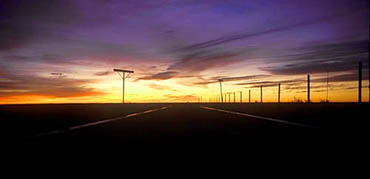


 Ketika membuka Temu Nasional 2009, Presiden Susilo Bambang Yudhoyono menekankan pentingnya jiwa kewirausahaan, inovasi teknologi, dan kreativitas. Ketiga aspek itu sebetulnya tercakup dalam nebula (megabudaya) China yang ironisnya tidak boleh diajarkan semasa Orde Baru. Dalam perjalanan sejarah di sekolah diajarkan pengaruh nebula yang berasal dari India, Arab, dan Eropa, tetapi tidak demikian halnya dengan sumbangan nebula China bagi peradaban Nusantara. Diskriminasi sejarah itu berlangsung sejak peristiwa G30S tahun 1965. Pemerintah melarang segala sesuatu yang berbau China.
 Pada abad ke-17, orang-orang Tionghoa di Batavia mengembangkan budidaya tebu. Penggilingan tebu itu sangat sederhana, yaitu dengan menaruh dua tabung kayu yangdiputar oleh seekor sapi dengn perantaraan sumber sistem roda gigi serta sebuah poros sepanjang 4,5 meter. Karena kekurangan bahan bakar untuk tungku, sejak tahun 1815 industri gula ini dipindahkan ke Jawa Tengah dan Jawa Timur.
 Etnis Tionghoa juga memiliki sumbangan dalam teknologi kelautan. Merekalah yang membuat kapal yang digunakan Pati Unus, pangeran dari Jepara, untuk menyerang Malaka. Perahu mayang dipakai nelayan lokal di pantai utara Jawa menggunakan dinding sekat kedap air khas China. Etnis Tionghoa juga aktif dalam budidaya tiram, kerang, dan ikan di tambak-tambak. Teknik pembuatan garam juga dikembangkan orang Tionghoa. Pembuatan produk ini dikuasai oleh mereka sebelum pemerintah kolonial Belanda abad ke-19 mengembangkan pembuatan garam secara modern dengan mengambil alih tambak-tambak garam besar di Gresik dan Sumenep.